
From a Lonely Intellectual Journey to the Knowledge Industrial Revolution
The thesis received only pass marks. Three years later the monograph was published in England and the United States.
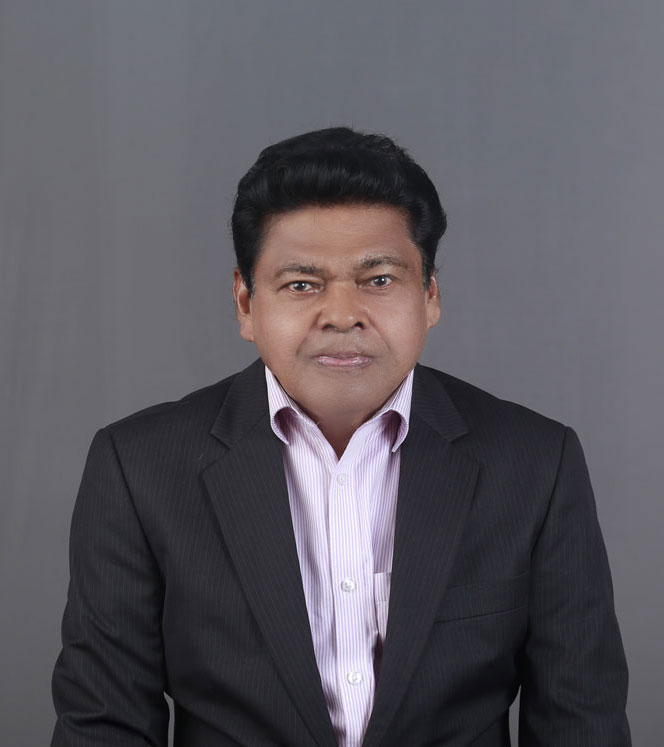 MKIC-ES-2025-01
In 1965 I joined S.B. College, Changanacherry, to study economics. I entered higher education with two ambitions: to become an economist, and to participate in shaping public life as a statesman.
My intellectual journey gradually took me in a direction I had never anticipated.
When I completed my Master’s degree in economics in 1970, I had developed a deep interest in both economics and political science. My passion, however, was not simply to obtain marks or qualifications. I was driven by questions. I wanted to understand how societies functioned, how economies developed and, increasingly, what role knowledge itself played in human progress.
My formal education ended, but my search for knowledge continued.
1. Discovering a New Intellectual Frontier
In 1978 I joined the Master’s programme in Library and Information Science at the University of Madras. During this period I also attended computer science classes at IIT Madras.
The combination of economics, information science and computer science opened an entirely new intellectual frontier. I began asking questions that at the time did not comfortably belong to any established academic discipline.
Could knowledge itself be studied as an economic force? Could knowledge production and consumption be scientifically analysed? Could the creation, flow and utilisation of knowledge become the basis of a new form of economic development?
I decided to apply my knowledge of economics and computer science to the development of an Economics of Knowledge.
However, there was little understanding of the implications of my research within the academic environment available to me. My thesis received only pass marks.
I was disappointed. I was not defeated. I took it as a challenge.
2. Recognition and a Wider Intellectual World
In 1981 my research monograph was published in England and the United States. It brought my work to the attention of Professor A. I. Mikhailov, one of the pioneering figures in informatics, Director of VINITI and Chairman of the FID Committee on Research on the Theoretical Basis of Informatics.
He nominated me to a twelve-member international committee of leading theoreticians in informatics.
In 1985 my Theory of Knowledge Consumption and Production Correlation and my Stage Theory of Knowledge Consumption and Production Growth were published in eight languages. The work attracted interest because of its possible applications in understanding the relationship between knowledge, production, consumption and human thinking. Some experts suggested these ideas could also have implications for the development of intelligent systems and artificial intelligence.
For me, that recognition was important — not as a personal achievement alone, but as confirmation that the questions I had been asking deserved to be pursued further.
3. The Lonely Voyage
I continued my research for decades. It expanded into the study of human thinking, knowledge consumption and production, the nature and structure of knowledge, the flow of knowledge and the possibility of industrialising knowledge production.
It was often a lonely intellectual journey. My ideas crossed the conventional boundaries of economics, information science, computer science and other disciplines. There were few people who could fully understand the direction in which I was moving, and there was little institutional support for such an unconventional path.
But I remained stubbornly committed to the work. I believed that humanity would eventually have to move beyond treating knowledge merely as information or as an invisible input into economic activity. Knowledge itself would become a productive force. It could be created, organised, transformed, reproduced, applied and industrialised.
4. Knowmatics: A New Framework
In 2005, after years of research, I propounded Knowmatics, which I defined as the mathematics and cybernetics of knowledge and the technology of knowledge industry.
Knowmatics was my attempt to create a systematic framework for understanding knowledge and its processes. I believed that just as earlier industrial revolutions transformed the production of material goods, a new revolution could eventually transform the production, organisation and utilisation of knowledge itself.
Again, my ideas were ahead of the intellectual frameworks available around me. Many people could not understand them. Few were prepared to support them. But I continued, because I had learned an important lesson from my own life.
An idea may be isolated not because it is wrong, but because society has not yet developed the conceptual framework necessary to understand it.
5. From Theory to the Knowledge Industrial Revolution
By 2025 the world had entered a new historical moment. Artificial Intelligence was rapidly transforming technology, business, employment, education and governance. At the same time, humanity was facing increasing inequality, unemployment, insecurity and the concentration of knowledge and technological power.
I felt that my decades of research had acquired a new urgency.
I therefore established the Knowledge Industrial Revolution Movement to promote what I call ten-fold human advancement, and to contribute to the building of a new global social order based on equity, dignity and freedom for all.
The objective is not simply technological advancement. The fundamental question is how the expanding power of knowledge and Artificial Intelligence can be organised for the advancement of all humanity rather than for the benefit of only a privileged minority.
6. The Next Stage: AI and Natural Intelligence
Today my work is focused on what I believe will become one of the greatest challenges of the future: the integration of Artificial Intelligence with Natural Intelligence within the framework of the knowledge industry.
AI should not simply replace human beings, destroy employment or concentrate economic power. The greater opportunity is to create a new relationship in which Artificial Intelligence expands human intelligence, creativity and productive capability.
This could transform education; governments and public administration; economic systems; employment and income generation; the organisation of knowledge; and the structure of society itself.
The coming Knowledge Industrial Revolution must therefore be more than another technological revolution. It must be a revolution in human capability and human opportunity.
7. Why I Continue
My journey began with a young student’s ambition to become an economist and statesman. It became a lifelong attempt to understand knowledge.
Today, after more than fifty years of intellectual exploration, research, struggle, misunderstanding and persistence, my purpose is clear. I want to contribute whatever I have learned to humanity.
I do not claim to possess all the answers. But I believe that the questions we ask today about knowledge, intelligence, AI, employment and human freedom will determine the future of civilisation. My own journey has convinced me that humanity is approaching a historic turning point.
The challenge is not merely to create more intelligent machines. The challenge is to create a more intelligent civilization.
That is the purpose to which I now wish to devote the rest of my life.